How Small Businesses Use AI to Qualify Leads Before They Enter the CRM Pipeline
A small business's customer relationship management system is only as good as its ability to handle qualified leads. One effective way to ensure this is by using artificial intelligence to qualify leads before they enter the CRM pipeline.
Benefits of AI-Powered Lead Qualification
- Improved lead conversion rates
- Reduced sales time
- Increased accuracy in identifying potential customers
AI-powered tools such as machine learning algorithms and natural language processing can quickly scan a customer's online activity, social media presence, and purchase history to identify those most likely to become paying customers.
How AI-Powered Lead Qualification Works
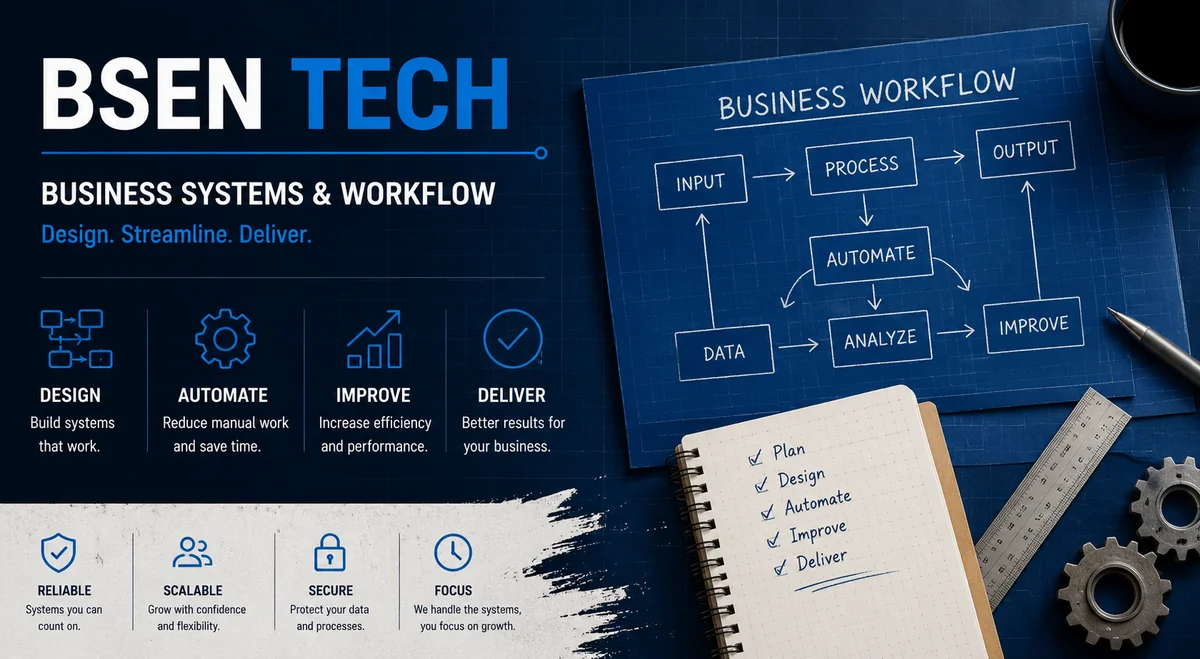
- Lead data is collected from various sources, including websites, social media, and CRM systems.
- AI-powered algorithms analyse this data to identify patterns and behaviour that indicate a potential customer's likelihood of converting into a paying client.
- The qualified leads are then passed on to the sales team for follow-up.
Best Practices for Implementing AI-Powered Lead Qualification
- Choose an AI-powered tool that integrates with your existing CRM system.
- Define clear criteria for lead qualification, including factors such as company size, industry, and job function.
- Regularly review and update these criteria to ensure accuracy.
Conclusion
AI-powered lead qualification is a powerful tool that can help small businesses streamline their sales process and increase revenue. By implementing this technology, you can ensure that only the most qualified leads enter your CRM pipeline, giving you a competitive edge in the market.
Using AI Qualification Without Letting Noise Into the Pipeline
The most useful version of this workflow is the one that helps the team make the next good decision quickly. That means the process should be visible in the CRM, the owner should be obvious, and the data required at each step should be specific enough that another colleague can pick up the record without starting from scratch. If the process only works when one experienced person is present, it is not yet documented well enough.
- Define the minimum facts needed before a lead deserves a place in the sales pipeline, such as business type, problem, timing, budget band, and location.
- Use AI to extract and summarise those facts from forms, emails, or chat transcripts, but keep the qualification rule itself explicit and reviewable.
- Route low-confidence or borderline cases to a person rather than forcing every enquiry through the same automated path.
- Track whether AI-qualified leads convert at a better rate than unqualified intake.
Worked Example
A small software consultancy gets many vague website enquiries. The business uses AI to summarise the stated problem, identify whether the enquiry matches its target sectors, and suggest a qualification status. A coordinator reviews the summary before the lead enters the main pipeline. This prevents the sales view from filling up with weak-fit leads while still keeping a record of inbound interest.
Common Mistakes to Avoid
- Letting the AI make a final sales decision without a business rule or review path.
- Using qualification criteria that are too vague to score consistently.
- Ignoring false negatives, where a promising lead is wrongly screened out.
- Failing to compare conversion quality before and after introducing the AI step.
Practical Checklist
- Write explicit qualification criteria.
- Capture source text and AI summary together.
- Review low-confidence cases manually.
- Compare conversion rates by qualification path.
- Refine prompts and rules from real outcomes.
What to Measure After Launch
Once the new section of workflow is in use, measure something concrete: the number of records corrected by hand, the time taken to move work to the next stage, the percentage of items with a clear owner, or the share of records that still need chasing outside the CRM. Those checks tell you whether the process is genuinely reducing friction or simply moving it to a different place.
When to Review the Setup
Do a short review after the first two weeks, then again after the first full month. At that point you will normally know whether the fields are sensible, whether the reminders arrive at the right moment, and whether staff are still maintaining side notes because the workflow does not yet fit the way the work really happens. Capture those findings in one place so the next round of changes is based on evidence rather than memory.
If you are introducing this change for the first time, review the workflow after two or three weeks of real use. Look for missing fields, repeated handoff problems, and reminders that nobody acts on. Small operational fixes made early usually have a bigger effect than adding more features later.
Can AI replace a human qualifier completely?
For most small businesses, no. It is better used to speed up sorting and summarising than to make final commercial judgements alone.
What should happen to rejected leads?
Keep them in a separate record set with the reason noted so patterns can be reviewed later.
How do I prove the approach works?
Measure time saved, lead response speed, and conversion quality instead of relying on impressions.
What is the simplest way to keep the process accurate over time?
Give one person responsibility for reviewing exceptions, stale records, and repeated staff questions on a regular schedule. A small maintenance habit usually keeps the workflow useful for much longer than a large redesign every few months.
Frequently Asked Questions
What are the benefits of using AI-powered lead qualification?
Improved lead conversion rates, reduced sales time, and increased accuracy in identifying potential customers.
How does AI-powered lead qualification work?
Lead data is collected from various sources, and AI-powered algorithms analyse this data to identify patterns and behaviour that indicate a potential customer's likelihood of converting into a paying client.
What are the best practices for implementing AI-powered lead qualification?
Choose an AI-powered tool that integrates with your existing CRM system, define clear criteria for lead qualification, and regularly review and update these criteria to ensure accuracy.
Streamlining workflows and automating tasks can significantly reduce administrative burdens on small teams, allowing them to focus on core business activities with greater efficiency. — Editor, BSEN Tech